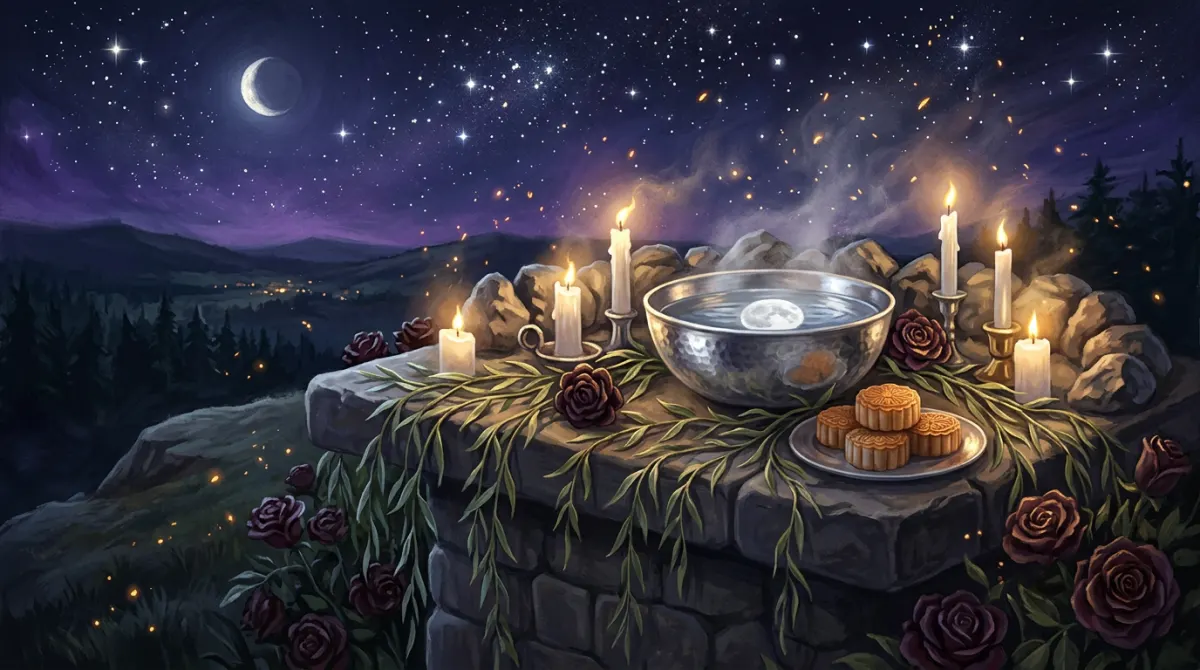
Also called Sharad Purnima kheer, Kojagiri milk, moon water
Setting food or water out under the full moon so it can take in the moon's light, then sharing it the next day. Rooted in India's autumn full-moon festival; modern witches do the same with water.
TraditionHindu Sharad Purnima observance
RegionIndia
EraLiving tradition
Moon○ Full moon
DayMonday · Moon
ElementWater
Difficulty●○○ Simple
TimeOvernight
Tonight's moon is read when the page loads.
The working
On the full moon, prepare a small pot of rice kheer, or fill a clean jar with fresh drinking water.
Cover it with mesh or muslin so moonlight reaches it but dust and insects cannot.
Set it where the moon shines on it, and speak a wish for health for your household.
Leave it in the moonlight overnight.
Bring it in before the sun is strong.
Share the kheer at breakfast, or use the water for tea, plants or washing your hands and face.
Take care: Cover food and water, keep milk dishes cool and throw them out if the night is warm or they smell off. Do not drink water left in an open or dirty container; use moon water externally if unsure.
Versions across time and place
i
Sharad Purnima kheer
North Indian Hindu · Living tradition
On the full moon of the month Ashvin, households make rice kheer and leave it under the moon all night, believing the rays drip amrita, nectar, into it. It is eaten the next morning as prasad. The night is also linked to Krishna's circle dance with the gopis.
Recorded in: Sharada Purnima, Wikipedia overview of the festival
ii
Kojagiri milk and Kojagari Lakshmi
Maharashtra and Bengal · Living tradition
In Maharashtra families stay up late on Kojagiri Purnima with saffron-cardamom milk warmed and cooled under the moon. In Bengal the same night is Kojagari Lakshmi Puja, when the goddess is said to ask 'who is awake?' and bless those keeping vigil.
Recorded in: Kojagiri and Kojagari Lakshmi Puja traditions
iii
Modern moon water
Contemporary witchcraft · Late 20th century onward
Many witches leave a jar of water under the full moon and use it for cleansing, plant watering or rituals. It has no documented ancient source, though it echoes customs such as the Indian one, and it is best described as a modern practice.
Recorded in: Popular modern practice; no historical lineage documented
History
Sharad Purnima falls on the full moon of the Hindu month Ashvin, usually in October, and closes the monsoon season. Texts and custom link it with Krishna's rasa lila and with Lakshmi, and in many regions people fast, keep an all-night vigil and leave sweetened milk or kheer under the moon so it absorbs the moon's healing nectar. The kheer is usually shared with neighbors too.
The practice is open household devotion and widely shared online by Indian families. Western witches' moon water, now very common on social media, developed separately in the late 1900s. No old source documents it, and honest books present it as modern practice that shares the old intuition that moonlight blesses what it touches. Both share the same simple act of leaving something out to catch the light.