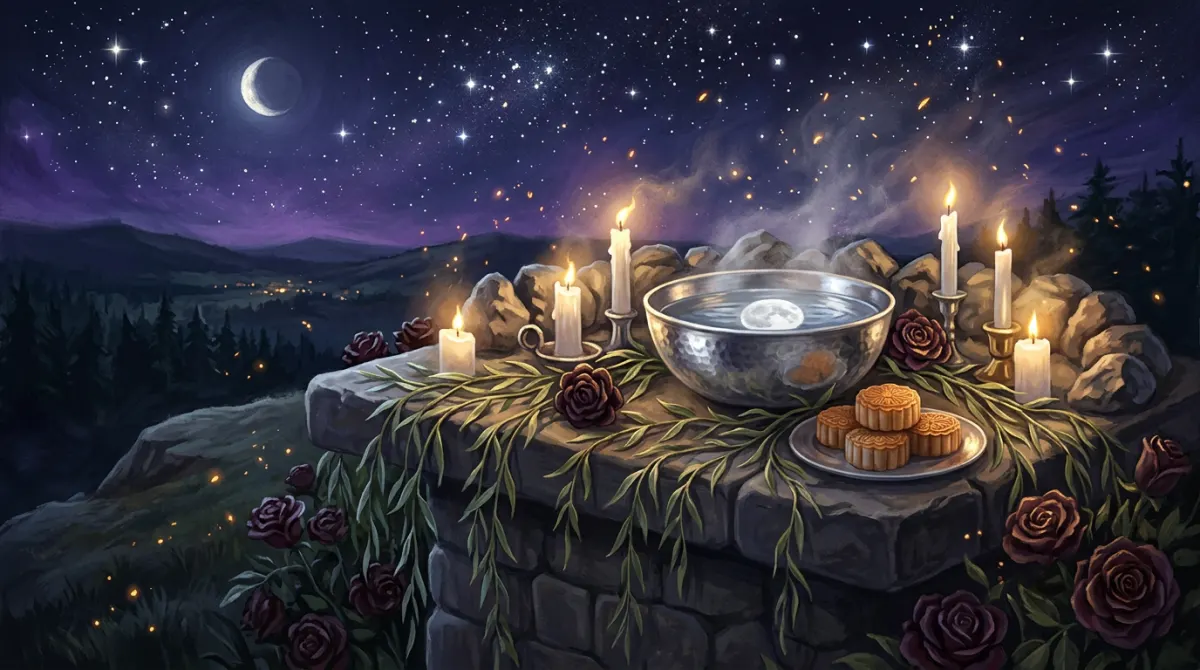
Also called March full moon, Crow Moon, Sap Moon, Lenten Moon
The Worm Moon is the popular name for March's full moon, the last full moon of winter or the first of spring. Its rite is a soil-waking blessing for seeds, gardens and fresh starts.
TraditionNorth American almanac lore and modern seasonal practice
RegionNorth America (northern hemisphere)
Era1760s records; popularized 1930s onward
Moon○ Full moon
DayMoon
ElementEarth
Difficulty●○○ Simple
Time30 to 45 minutes on the night of the full moon. It falls in March in the northern hemisphere; the next one is in March 2027.
Tonight's moon is read when the page loads.
The working
On or near the March full moon, loosen the soil in the pot or bed with your hands so it can breathe.
Notice what is stirring outdoors: thawing ground, birds returning, sap rising, worms after rain.
Write one thing you want to grow this year on a slip of paper.
Press the seeds into the soil and say your intention as you cover them.
Water them gently and thank the soil and the creatures that keep it alive.
Tear the paper into small pieces and add them to compost, or keep it by the pot until the first sprouts show.
Take care: Keep any candle on a fireproof dish and never leave it burning unattended. If you go outside at night, dress for the weather, take a light and tell someone where you are. Moon names tied to specific Native nations belong to living languages and ceremonies. Read them as those nations' own knowledge, not as rites to copy; the steps here are an open seasonal practice anyone can do.
Versions across time and place
i
Carver's worm month
18th-century traveler's account · 1760s, published 1778
Carver's year began with the first new moon after the spring equinox, and he called that month the Worm Moon. His explanation was not earthworms but grubs and larvae coming out of the bark and wood where they had sheltered all winter.
Recorded in: Jonathan Carver, Travels Through the Interior Parts of North America (1778)
ii
Snowcrust and Sugaring Moon
Ojibwe (Anishinaabe) · living tradition
Ojibwe language resources give March names such as Onaabani-giizis, Snowcrust Moon, and Ziizbaakdoke-giizis, Sugaring Moon, for the season of maple sap. Which name is used depends on the community and on how early spring reaches it.
Recorded in: Ojibwe.net, Months / Moons
iii
The Lenten Moon
English and colonial almanac usage · 1937 print
The 1937 Maine Farmers' Almanac put the Lenten Moon among its winter moons, a church-calendar name pointing to the fast before Easter. It reflects the European side of the almanac tradition.
Recorded in: Maine Farmers' Almanac (1937), as summarized in Wikipedia's Full moon article
History
Most modern articles say the Worm Moon is named for earthworms rising as the ground thaws, and the Old Farmer's Almanac gives that reading. The oldest printed source, Jonathan Carver's 1778 travel book, explains it differently: the worms of his Worm Moon were insect larvae leaving tree bark after winter. Carver placed this month first in the year, starting from the new moon after the spring equinox.
The almanac also lists other March names, such as Sugar Moon for the Ojibwe, Sore Eyes Moon for the Dakota, Lakota and Assiniboine, from sunlight glaring off snow, and Crow Comes Back Moon for the Northern Ojibwe. Alongside them stands the Lenten Moon of English usage. The worm name won out in the popular list partly because it is short and memorable.