West of Scotland
Napier recorded that having money in your pocket at first sight of the new moon, and turning it, meant you would not lack money that month. Seeing the new moon through glass, he noted, spoiled the luck.
Also called turning money at the new moon, bowing to the new moon
On first seeing the new crescent, turning over the coins in your pocket, and in some places bowing to the moon, so your money grows with it through the month.
Tonight's moon is read when the page loads.
Take care: Watch where you are walking when looking up at the evening sky, and stay off roads.
Napier recorded that having money in your pocket at first sight of the new moon, and turning it, meant you would not lack money that month. Seeing the new moon through glass, he noted, spoiled the luck.
Children across Ireland wrote down the custom: turn your money three times, or turn it upside down, at first sight of the new moon and your purse will not be empty, or the money will double, before the next moon. Some also blessed themselves or said a short prayer to the moon.
English sources describe bowing, curtseying or nodding to the new moon, sometimes nine times, and greeting her aloud. Turning silver and bowing were often done together, and some refused to look at her first through glass or trees.
Greeting the new moon is very old: Christian writers from the early Middle Ages scolded people for hailing the new moon, and the custom survived in Britain and Ireland into living memory. By the 1800s the commonest form was a money charm, since the waxing moon was thought to increase whatever was started under it. Silver was preferred, since it was the moon's metal.
James Napier, a Paisley chemist and antiquary, set down the Scottish form in 1879. In 1937 to 1939 the Irish Folklore Commission had schoolchildren collect local customs, and many recorded turning money at the new moon. Opie and Tatem's Dictionary of Superstitions (1989) gathers English records of bowing and turning silver. Its results are now searchable at dúchas.ie. Some added a wish or a short rhyme.
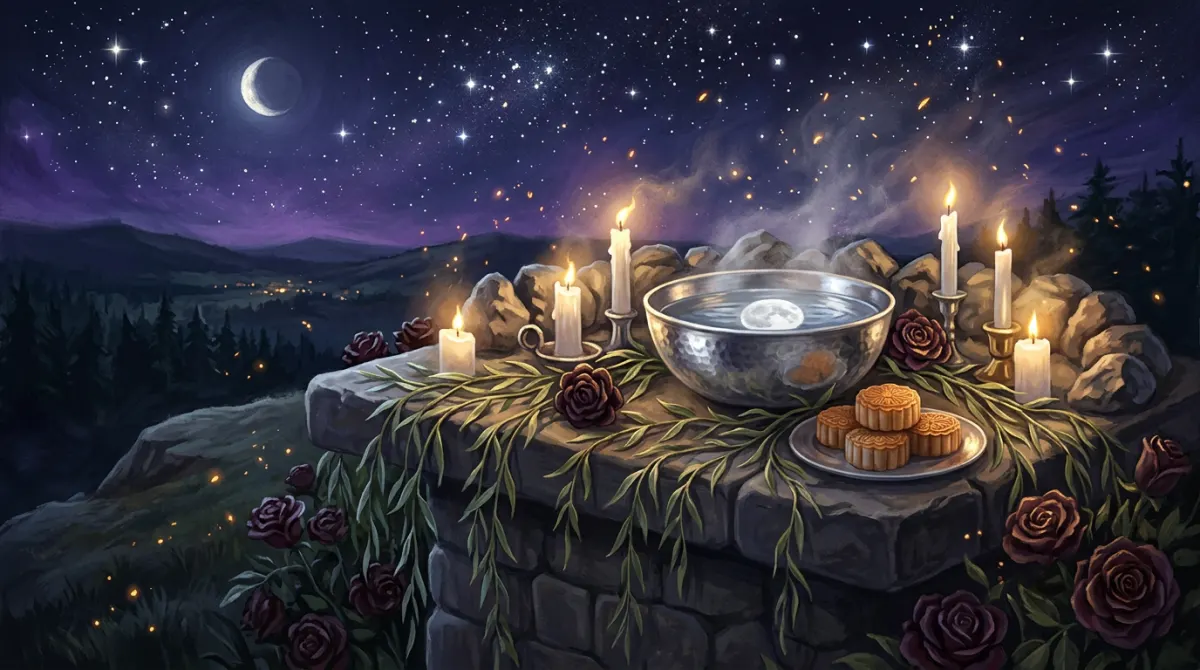
Setting food or water out under the full moon so it can take in the moon's light, then sharing it the next day. Rooted in India's autumn full-moon festival; modern witches do the same with water.
A Wiccan working gathering held on the full moon, separate from the eight seasonal sabbats, for magic, healing work and honoring the Goddess.
Tell us what you need and we will craft a custom spell, charm or reading for it. Or call to book a reading or a road blessing in person.