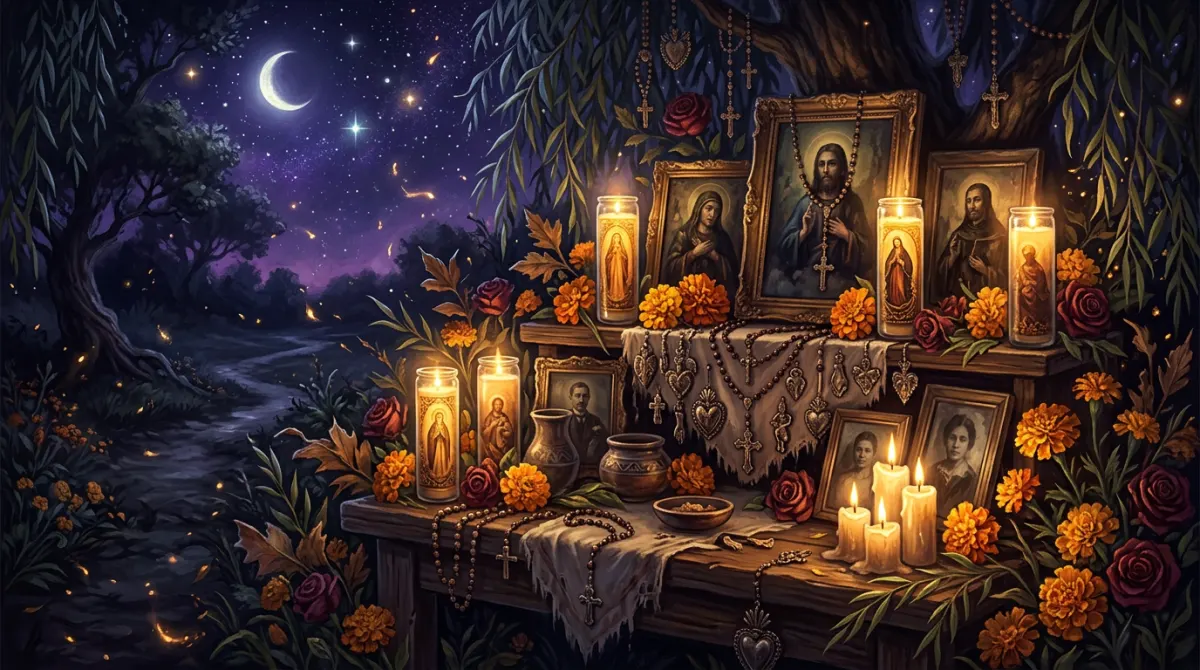
Also called Siete Potencias Africanas, 7 African Powers, Seven African Powers candle
The Seven African Powers is a popular image and candle showing seven Catholic saints who stand for seven orishas of Santería (Lucumí), sold in botánicas across the Americas for protection and help. The orisha religion behind it is initiatory, so this page covers its history and an open, respectful way to engage.
TraditionAfro-Cuban Santería (Regla de Ocha, Lucumí) and botánica folk practice
RegionCuba, United States, Puerto Rico, Mexico
Era20th century image; religion from the 19th century
Moon◐ Any moon
DayAny
ElementSpirit
Difficulty●○○ Simple
Time20 minutes
Tonight's moon is read when the page loads.
The working
Know what you are holding. The candle is a popular devotional product, but the orishas named on it are honored within Santería, a religion with priests, initiation and house-temples (ilé). Making offerings to specific orishas or receiving their objects is done through that community.
If you are drawn to the orishas, visit a reputable botánica or contact an established ilé, ask questions respectfully, and expect a reading (divination) before any spiritual work is prescribed.
For an open practice at home that does not imitate initiatory rites, set the candle and a glass of water on a clean shelf as a prayer for protection and strength for your household.
Light the candle and pray in your own words, or pray the Our Father as many buyers of the candle do, asking God and the saints shown on the label for help.
Write down seven things in your life you are grateful for or need strength in, one for each band of color, and read them aloud.
Never leave the candle burning unattended; snuff it and relight it each day until it is finished, then recycle the glass.
Take care: Santería (Lucumí) is a living initiatory religion; do not perform its ceremonies, make orisha offerings or claim initiation without a teacher from the tradition. Glass candles can crack if burned to the very bottom; set them on a heat-proof plate.
Versions across time and place
i
The printed image
Cuban and Cuban-American popular devotion · 20th century
The familiar print shows seven medallions with Catholic saints joined by a chain around a central crucifix, each standing for an orisha. Common pairings include Changó with Saint Barbara, Oshún with Our Lady of Charity of El Cobre, Yemayá with Our Lady of Regla and Obatalá with Our Lady of Mercy; the exact seven vary between printings and teachers.
Recorded in: Duke University Sacred Arts collection; Joseph M. Murphy, Santería: African Spirits in America
ii
Santa Muerte's seven-color candle
Mexican Santa Muerte devotion · Late 20th century to present
Chesnut traces the seven-colored Santa Muerte candle, used to ask for help on several fronts at once, to the Seven Powers candle that Cuban migrants brought to Mexico. It shows how the image traveled well beyond Santería itself.
Recorded in: R. Andrew Chesnut, Devoted to Death (2012)
iii
Hoodoo and spiritual supply use
American botánica and spiritual supply trade · 20th century to present
Seven African Powers candles, oils and incense are also sold through Hoodoo and general spiritual supply shops, often labeled for protection from evil. Practitioners inside Lucumí often point out that these products are not a substitute for the religion's own rites.
Recorded in: Museum collections such as the Hackney Museum, London
History
Santería, also called Regla de Ocha or Lucumí, developed in Cuba in the 19th century among enslaved and free Africans of Yoruba descent, who honored their orishas while living under Catholic rule. Over time orishas came to be identified with Catholic saints whose stories or colors echoed theirs, so that the red-and-white Changó was linked with Saint Barbara and the river orisha Oshún with Cuba's patroness, Our Lady of Charity of El Cobre.
The Seven African Powers grouping became famous through printed images and candles produced for the Cuban and Caribbean diaspora in the United States in the 20th century, sold in botánicas and later in ordinary grocery stores. Many people who buy the candle are Catholics or Spiritists rather than initiates. Within the religion, initiation, divination and offerings are guided by priests, and many practitioners today prefer to separate the orishas from their saint masks.