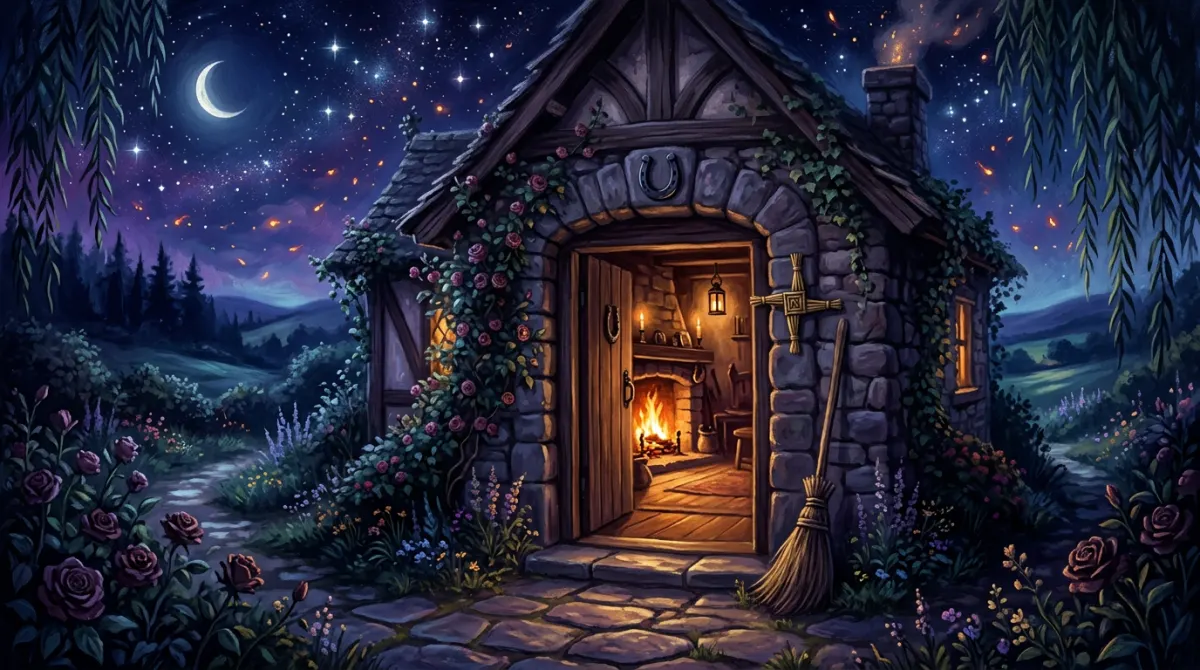
Also called first foot, qualtagh, pódariko, mekvle
The first visitor to cross the threshold after midnight on New Year sets the household's luck for the year, so they arrive with gifts of coal, bread, salt and drink.
TraditionScottish New Year custom
RegionScotland and northern England
Era18th century to present
Moon◐ Any moon
DayAny
ElementFire
Difficulty●○○ Simple
TimeMidnight on 31 December, about an hour
Tonight's moon is read when the page loads.
The working
Before midnight, clean the house and clear the ashes from the hearth so the year starts fresh.
Arrange for your first-foot to be someone who is outside the house when the clock strikes twelve.
Your first-foot gathers the gifts and waits outside for the bells.
Just after midnight, they knock and are welcomed in, stepping across the threshold first before anyone else enters.
They give each gift and say what it stands for, then place the coal on the fire or by the hearth.
Toast the new year together and offer food and drink in return, so the luck flows both ways.
Never send a first-foot in empty-handed; that was thought very unlucky.
Take care: Offer non-alcoholic drinks to drivers and children, and be careful handling coal near an open fire or carrying it around fabric.
Versions across time and place
i
The Manx qualtagh
Isle of Man · 19th century
On the Isle of Man the first person met on New Year's morning was called the qualtagh. As in Scotland, a dark-haired man was the luckiest, while a red-haired or fair visitor, or a woman, was feared to bring trouble in some districts.
Recorded in: Wikipedia, 'First-foot'
ii
Greek pódariko
Greece · Present
Greek families choose a child or a lucky, kind person to be the first to enter on New Year's Day, stepping in with the right foot first. Sometimes a pomegranate is smashed at the threshold so its seeds scatter good fortune into the house.
Recorded in: Revels, 'First Footing'
iii
Georgian mekvle
Georgia (Caucasus) · Present
In Georgia the mekvle is the first guest of the new year, chosen ahead of time for a warm character. They bring sweets and gifts and their luck is believed to colour the household's year.
Recorded in: Wikipedia, 'First-foot'
History
Hogmanay grew into Scotland's main midwinter holiday after the Reformation discouraged Christmas, and first-footing became its central house custom. The first-foot ideally was a tall, dark-haired man who was not already in the house at midnight. People often explain the preference as a memory of fair-haired Viking raiders, but that story is a later guess. Some districts barred doctors, ministers or gravediggers from the role because of their links with sickness and death.
F. Marian McNeill recorded the custom across Scotland in the third volume of The Silver Bough, published in 1961, including the gifts and their meanings. The practice faded in cities in the late twentieth century as people went out to public celebrations, but it remains alive in many families. Similar first-visitor beliefs exist from the Isle of Man to Greece and Georgia.