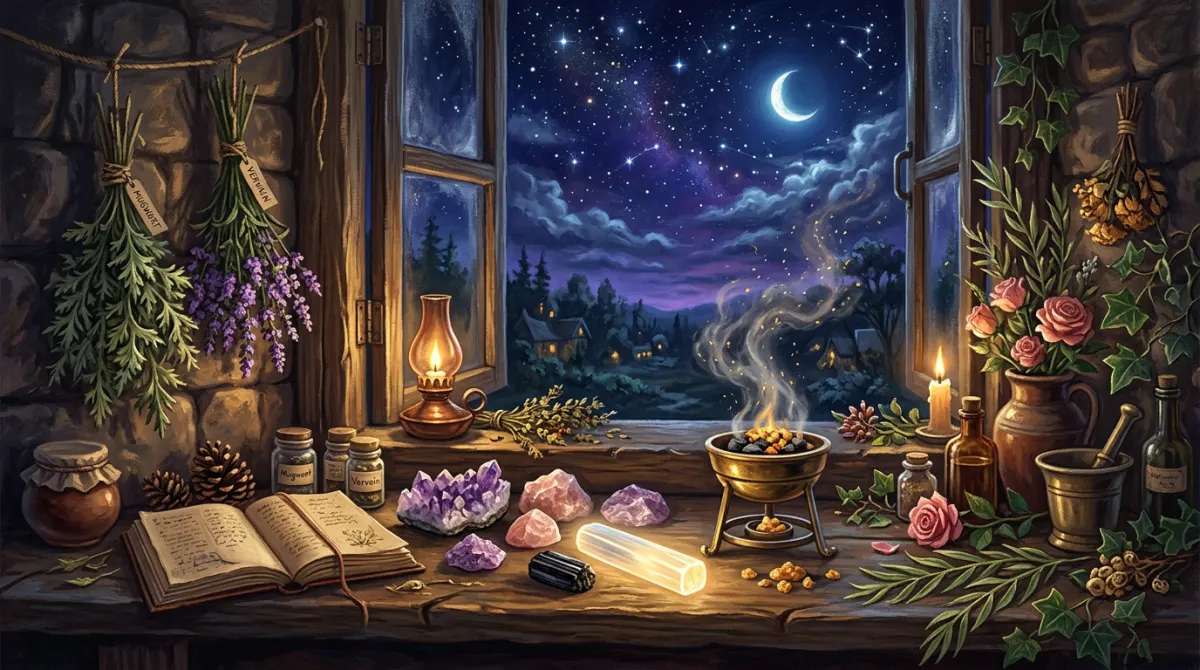
Also called copalli, pom, copal blanco, copal negro
Copal is the bright, piney tree resin that peoples of Mexico and Central America have burned as a sacred offering for well over a thousand years. Its white smoke still rises over Day of the Dead altars, church doors and village ceremonies, and it can be burned at home with respect as an offering of thanks or remembrance.
TraditionMesoamerican Indigenous religion (Maya, Mexica and others), continued in Mexican Catholic and Indigenous practice
RegionMexico, Guatemala, Central America
EraPre-Columbian to present
Moon◐ Any moon
DaySunday · Sun
ElementFire
Difficulty●○○ Simple
Time20 to 30 minutes
Tonight's moon is read when the page loads.
The working
Set up near an open window or outdoors, away from pets and birds, with the burner on a heat-proof surface.
If this is for remembrance, arrange the photo, flowers, candle or a favorite food of the person you are honoring.
Light the charcoal with tongs and wait until it is fully ashed over.
Add one or two pieces of copal. It melts fast and gives a thick white smoke, so start small.
Lift the burner gently toward each direction or simply toward your altar, and speak your thanks or the names of those you remember.
Let the smoke settle around the offering. Sit quietly while it burns.
Let the charcoal burn out safely in the dish or drown it, then air the room.
Take care: Burn copal only on incense charcoal in a clay or fireproof dish with a window open; it smokes heavily and should be kept away from pet birds, small children and anyone with asthma. Never leave the charcoal unattended. Copal belongs to living Indigenous and Mexican traditions; burn it as a respectful offering and do not imitate a community's ceremony or claim a title such as curandera you have not been given.
Versions across time and place
i
Copal as food for the gods
Mexica (Aztec) and Maya ritual · Postclassic, before 1521
Archaeologists have recovered shaped pieces of copal from the Sacred Cenote at Chichen Itza and from offerings at the Templo Mayor in Mexico City. Some were molded like tortillas, tamales or ears of corn, suggesting copal was literally fed to the gods.
Uses: copal shaped into food forms
Recorded in: El Universal English, Copal: food for the gods; Templo Mayor excavations
ii
Day of the Dead copal
Mexican Día de Muertos · Colonial period to present
Families burn copal on home altars and at gravesides on November 1 and 2 to purify the space and guide the returning dead with its scent, alongside marigolds, candles and the dead person's favorite foods.
Recorded in: Rebecca Mendoza Nunziato, Sacred Smoke of Copal, ReVista (Harvard), 2021
iii
Danza and temazcal copal
Contemporary Indigenous and Chicanx ceremony · 20th to 21st century
Concheros and Aztec dance groups open their ceremonies with copal smoke, and it is burned in sweat lodges and by healers on both sides of the US-Mexico border. These are community rites led by people within those traditions.
Uses: copal, sahumador
Recorded in: Rebecca Mendoza Nunziato, Sacred Smoke of Copal, ReVista (Harvard), 2021
History
The word copal comes from Nahuatl copalli, meaning incense. It names resins from several trees, especially Protium copal and Bursera species, collected by cutting the bark. Copal was burned in household shrines, temples and caves across Mesoamerica. Pieces recovered from the Sacred Cenote at Chichen Itza and from the Templo Mayor of Tenochtitlan, built between 1325 and 1521, still give off their scent after five centuries underground, and some were shaped like food offerings.
Copal's white smoke was understood as a way to carry words and offerings to the deities, and in some accounts as the blood of trees. After the Spanish conquest, copal moved into Catholic feast days, cemetery visits and especially Día de Muertos, while Maya and other Indigenous communities kept using it in their own prayers. These are living traditions, so treat copal as a gift from those cultures rather than a prop.