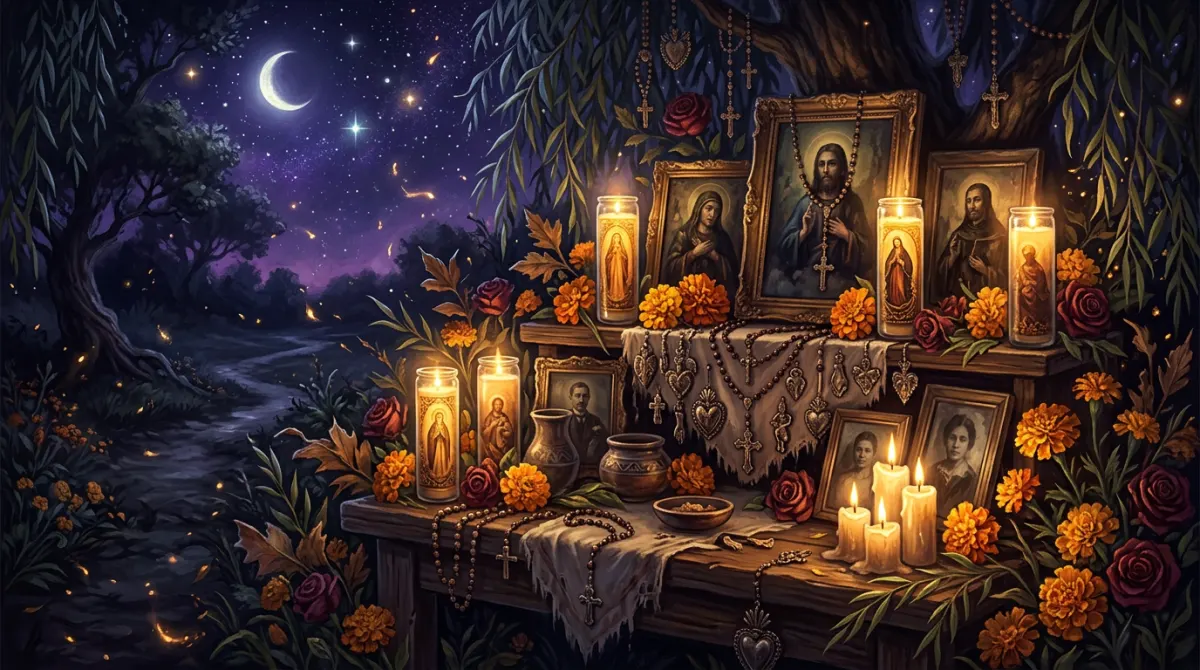
Also called ancestor shrine, family altar, altar to the ancestors
A small, regularly tended shrine where a family remembers its dead with photographs, light, water and offerings, a practice shared in different forms by Chinese, Japanese, Vietnamese, African, Afro-Caribbean, Mexican and modern pagan households.
TraditionAncestor veneration across cultures
RegionWorldwide
EraAncient to present
Moon◐ Any moon
DayAny
ElementSpirit
Difficulty●○○ Simple
Time30 minutes to set up, a few minutes regularly
Tonight's moon is read when the page loads.
The working
Choose a clean, quiet place. Many traditions avoid bedrooms and bathrooms for an ancestor shrine.
Cover the surface with a cloth and arrange the photographs or written names of the people you are remembering.
Place a glass of fresh water and a candle or lamp in front of them.
Light the candle, greet your ancestors by name and tell them what is happening in the family. Thank them for what they passed on.
Offer something simple they loved, such as coffee, tea, a piece of fruit or a flower. Remove perishable food after a day.
Return regularly, weekly or on anniversaries and holidays, to change the water, dust the shrine and speak to them.
Take care: Keep candles and incense away from photographs and curtains and never leave them burning unattended. Specific rites of initiatory religions such as Vodou and Lucumí belong to their communities; seek a teacher rather than copying them.
Versions across time and place
i
Chinese ancestral tablets
Chinese ancestor veneration · Ancient to present
Families keep wooden tablets bearing the names of ancestors on a household altar, burn incense and set out food on the 1st and 15th of the lunar month and at festivals. At Qingming in spring they sweep graves and make offerings. The practice expresses filial piety, the duty to care for parents during and after life.
Recorded in: Wikipedia, Ancestor veneration in China
ii
The Japanese butsudan
Japanese Buddhist households · Edo period to present
A cabinet shrine holds a Buddhist image and memorial tablets for the family's dead. Families offer rice, water, flowers and incense, ring a small bell and pray, especially at the summer Obon festival when the dead are believed to return.
Recorded in: Wikipedia, Butsudan
iii
The Gede and the dead in Haitian Vodou
Haitian Vodou (initiatory religion) · Present day
In Vodou the dead are honored by family and temple, and the Gede, spirits of the dead led by Baron Samedi, are celebrated around November 1 and 2. Temple rites are led by initiated priests and priestesses and are not for outsiders to copy; a simple family shrine with photos, water and a candle is the open part anyone can share.
Recorded in: Wikipedia, Haitian Vodou; Wikipedia, Gede
History
Honoring the dead at home is among the oldest religious practices on record. In China, ancestor veneration goes back at least to the Shang dynasty, whose kings consulted their ancestors through oracle bones, and Confucian teaching later made rites for parents and grandparents a moral duty. Japanese, Korean and Vietnamese households developed their own altars, and across West and Central Africa ancestors are understood to remain part of the family, able to guide and protect the living.
Enslaved Africans carried these ideas to the Americas, where they shaped Afro-Caribbean religions and African American memorial customs. Mexico's Day of the Dead joined Indigenous and Catholic practice. In the late 20th century many modern pagans and people of no particular religion began building ancestor altars too, often as a way to process grief and stay connected to family history.