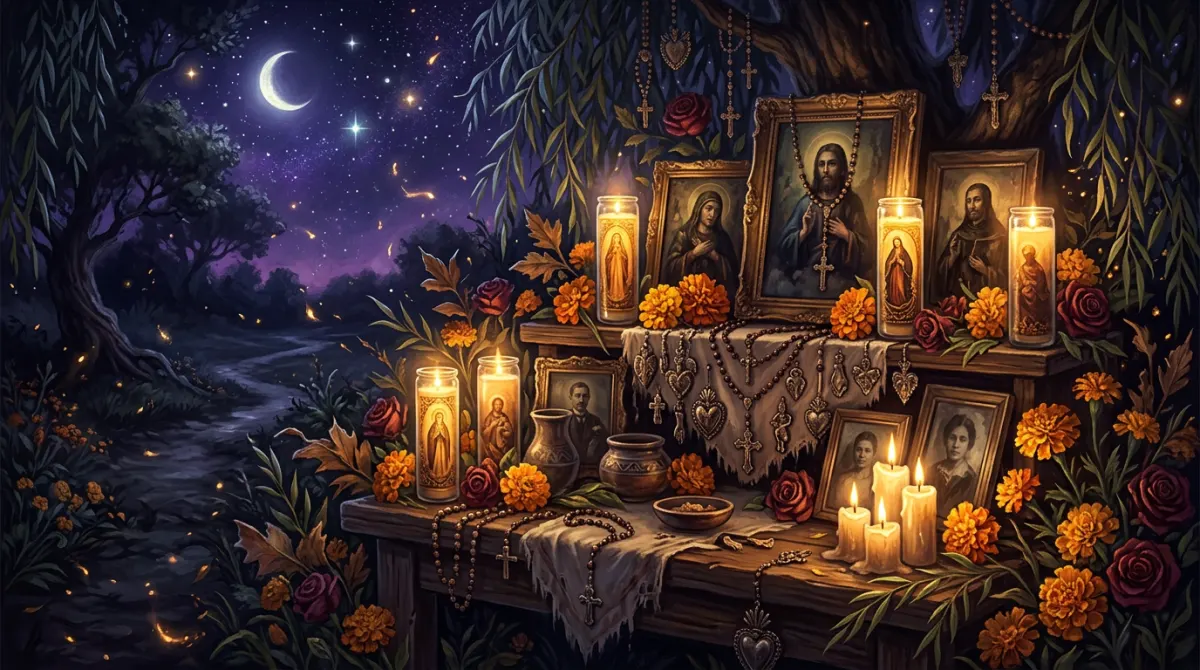
Also called ofrenda, altar de muertos, Día de Muertos altar
A home altar built for the Mexican Day of the Dead, set with photographs, marigolds, candles, water, salt, pan de muerto and the favorite foods of the dead so that their spirits feel welcome when they return on November 1 and 2.
TraditionMexican Día de Muertos
RegionMexico and Mexican communities abroad
EraIndigenous roots, colonial Catholic form, living tradition
Moon◐ Any moon
DayAny
ElementSpirit
Difficulty●●○ Moderate
TimeAn afternoon to build, kept up from late October to November 2
Tonight's moon is read when the page loads.
The working
Set up the altar in late October, against a wall in a calm place. Stack sturdy boxes on a table to make levels and cover them with a cloth.
On the top level place photographs of the dead, along with a cross or images of saints or the Virgin if your family uses them.
On the middle level set the things that make them feel at home: pan de muerto, their favorite dishes, sweets, drinks, and small personal objects.
On the lower level put a glass of water for their thirst after the journey, a dish of salt, a washbasin or towel if you like, and candles.
Decorate with marigolds and papel picado, and lay a path of marigold petals from the altar toward the door so the spirits can find their way.
Light the candles and copal in the evenings of November 1 (traditionally for children) and November 2 (for adults), and tell stories about the people you are honoring.
After November 2, share the food with family. Many say it has lost its flavor because the dead have taken its essence.
Take care: Paper decorations and dried flowers burn easily; keep candles well away from them, use battery candles if children or pets are around, and never leave the altar lit unattended.
Versions across time and place
i
The three-tier altar
Mexico, widely shared · Present day
A common layout uses three levels: the top for photographs of the dead with saints, the Virgin and crucifixes set in a retablo; the second for food and comforts that make the dead feel at home; and the lowest for candles, water and other essentials. Some families build two levels or many more, and the meaning of each level varies by region and household.
Recorded in: Wikipedia, Ofrenda
ii
Regional ofrendas
Oaxaca, Michoacán, Veracruz · Present day
In Oaxaca altars often include brightly painted alebrijes and arches of flowers and sugarcane. Michoacán altars feature sugar skulls and papel picado, while on the Veracruz coast families add seashells and fish to honor the sea.
Recorded in: Wikipedia, Ofrenda
iii
Public and community altars
Mexico City, US Mexican-American communities · Late 20th century to present
Schools, museums and city squares now build large shared ofrendas, sometimes honoring famous figures or victims of disasters. In the United States they have become a way for Mexican-American families to pass on the custom.
Recorded in: UNESCO, Indigenous festivity dedicated to the dead
History
The Day of the Dead blends Indigenous Mesoamerican ways of honoring the dead with the Catholic feasts of All Saints and All Souls on November 1 and 2. Scholars still debate the balance: Spanish friars such as Diego Durán and Bernardino de Sahagún recorded Aztec festivals for the dead, while many details resemble Spanish All Souls customs. Its center is the ofrenda, Spanish for offering, a home altar where the dead are welcomed back as honored guests rather than mourned.
Marigolds, called cempasúchil from Nahuatl, are believed to guide the spirits with their color and scent, and pan de muerto, a sweet bread topped with bone shapes, is baked in the weeks before. In the 20th century the Mexican state promoted the festival as a national symbol, and in 2008 UNESCO added the indigenous festivity dedicated to the dead to its Representative List of the Intangible Cultural Heritage of Humanity.