Also called votive candle, vigil light, veladora, petition to Our Lady, lighting a candle for someone
The Catholic and wider Christian custom of lighting a small candle before an image of Mary or a saint as a lasting sign of a prayer, often with a written petition left at the shrine or tucked under the candle at home.
TraditionCatholic and Orthodox popular devotion
RegionEurope and the Americas, worldwide
EraLate antiquity to present
Moon◐ Any moon
DaySaturday
ElementFire
Difficulty●○○ Simple
Time10 minutes
Tonight's moon is read when the page loads.
The working
Decide what you are asking for, or whom you are praying for, and write it on the paper in a sentence or two. Sign it or simply write the person's first name.
In church, place a donation in the box, light a votive from one already burning or with a taper, and set it before the image. At home, set the candle in a glass holder in front of the image.
Place your folded petition beside the candle, or in a church's petition box or book if there is one.
Pray a Hail Mary or a short prayer in your own words, asking Mary to pray with you for this intention.
Leave the candle to burn as a sign that your prayer continues after you go. At home, never leave it unattended; snuff it and relight it when you return.
When the candle is finished, burn or bury the petition, or keep it to give thanks later.
Take care: Use glass holders on a heat-proof surface, keep paper petitions away from the flame and never leave a candle burning unattended or near curtains.
Versions across time and place
i
Nordic Lutheran candle stands
Swedish and Nordic Lutheran churches · Present day
Most Nordic Lutheran churches keep a round metal candle stand, the ljusbärare, with a large central candle from which visitors light small candles of their own. It shows the custom of lighting a candle as a prayer outlasted the Reformation and is shared by Catholics, Lutherans and Anglicans alike.
Recorded in: Wikipedia, Votive candle
ii
Orthodox tapers before icons
Eastern Orthodox Christianity · Ancient to present
Worshippers set long, thin beeswax candles in sand-filled stands before icons of Christ or the Theotokos. Orthodox churches usually keep a separate stand for candles lit for the departed, so prayers for the living and the dead are kept apart.
Recorded in: Wikipedia, Votive candle
iii
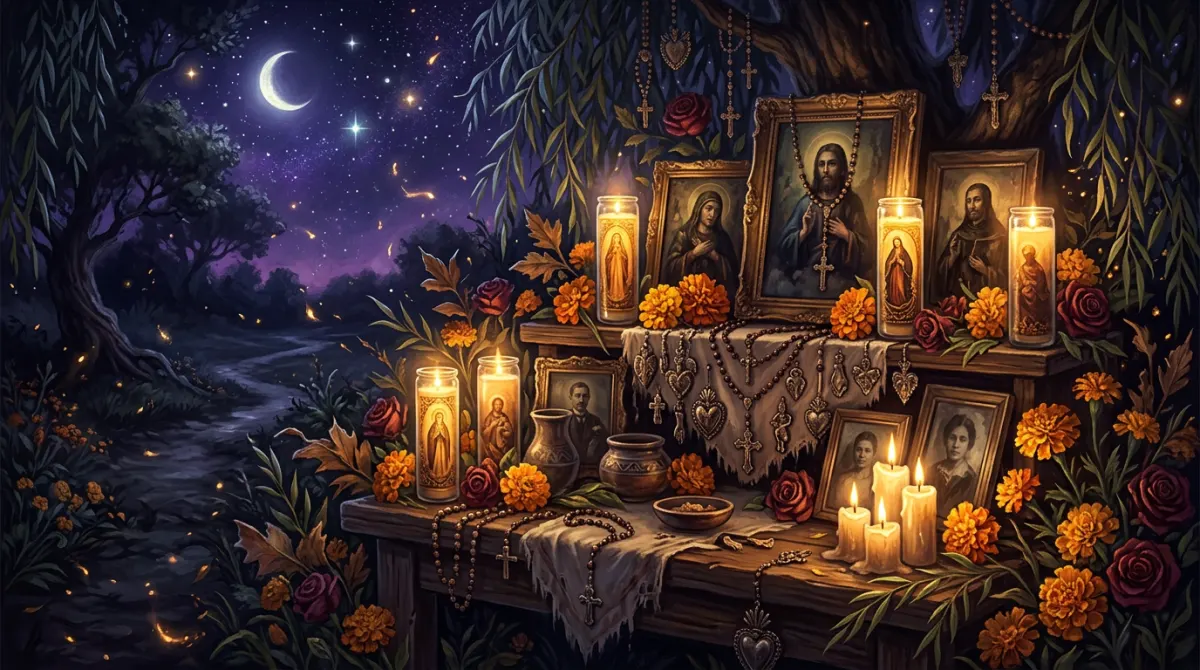
Veladoras in Latin American homes
Mexican and Latin American Catholic practice · 20th century to present
Tall glass candles printed with Our Lady of Guadalupe, the Sacred Heart or a saint burn for days on home altars and in shops. Families light one for a sick relative, a traveler or a new job, and sometimes tape a photo or petition to the glass.
Recorded in: General description of popular practice
History
Christians have burned lamps and candles at the tombs of martyrs and before holy images since late antiquity, a custom that grew from the general practice of offering light in thanks or petition. By the Middle Ages, churches across Europe held racks of candles before images of Mary and the saints, and the light was understood as a sign that a person's prayer continued after they left.
Written petitions grew alongside the candles. Many shrines keep boxes or books for prayer requests, and religious orders promise to remember them at Mass. Churches usually place a donation box beside the candle rack, so lighting a candle is also a small gift to the church. In the 20th century cheap glass vigil candles made the custom easy at home, especially in Latin American households, and petition candles became one of the most widespread devotions in the Christian world.