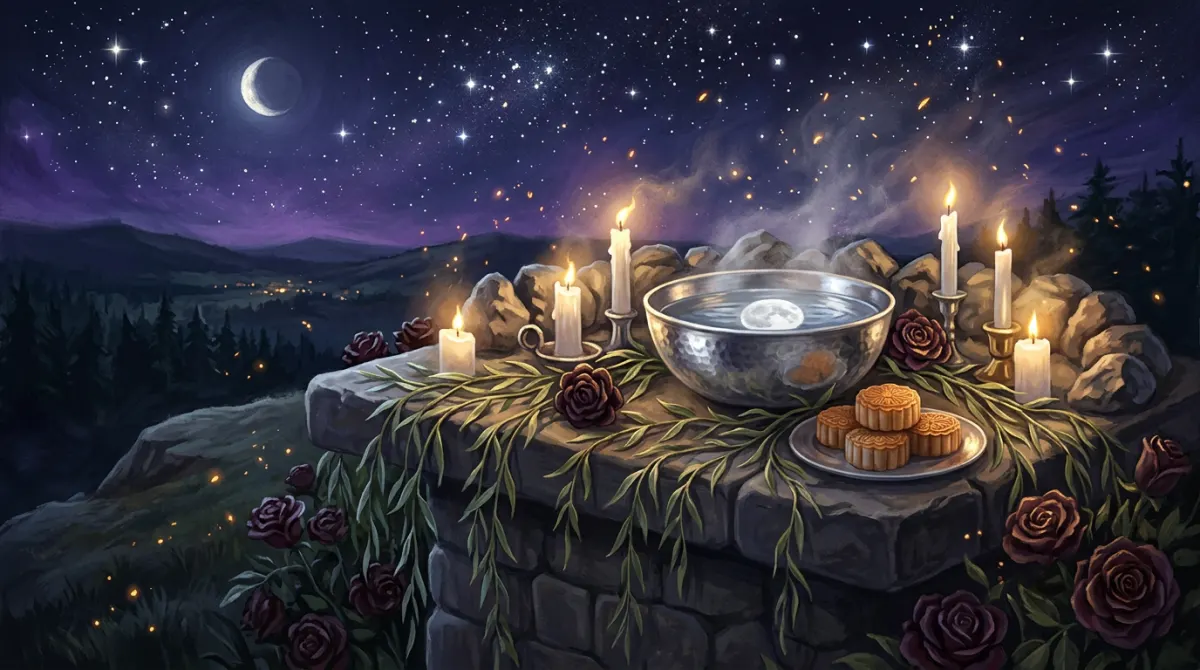
Also called cakes and wine, simple feast, the blessing of cakes and wine
Cakes and Ale is the part of a Wiccan ritual where food and drink are blessed, shared and partly offered back to the gods, usually near the end of an esbat or sabbat. It gives thanks and helps participants ground after magical work.
TraditionModern Wicca
RegionBritain and the United States
EraMid-20th century onward
Moon○ Full moon
DayMoon
ElementEarth
Difficulty●○○ Simple
Time15 minutes at the end of a ritual
Tonight's moon is read when the page loads.
The working
After your ritual or spell is finished, and before closing the circle, bring the cakes and drink to the altar.
Hold the cup up and bless it, for example: 'I bless this drink in the names of the Goddess and God; may I never thirst.' In coven practice the athame is lowered into the cup to symbolise their union.
Hold the plate of cakes and bless them in the same way: 'May I never hunger.'
Set a small portion of cake and a splash of drink aside in the offering dish.
Eat and drink slowly, sharing with others if you work in a group, and talk about what happened in the ritual.
Close the circle as usual, then pour the offering on the earth or leave it under a tree.
Take care: Use juice or water if anyone present is under age, driving or avoiding alcohol. Leave only biodegradable offerings outdoors, and keep chocolate and raisins away from places dogs roam.
Versions across time and place
i
Gardnerian cakes and wine
Gardnerian Wicca · 1950s
Early Gardnerian material describes consecrating cakes and wine, with the priestess holding the cup and the priest lowering the athame into it. 'Cakes and ale' became the more common name in later, wider Wiccan and pagan practice.
Recorded in: Gardnerian Book of Shadows material, as published by Janet and Stewart Farrar and others
ii
Shakespeare's cakes and ale
Elizabethan English · c. 1601
Sir Toby Belch asks the puritanical Malvolio whether, because he is virtuous, there will be no more cakes and ale. The phrase came to mean the simple pleasures of life and of festival. W. Somerset Maugham used it as a novel title in 1930.
Recorded in: William Shakespeare, Twelfth Night, Act 2, Scene 3
iii
Moon cakes for the Queen of Heaven
Ancient Near East · c. 6th century BCE
The prophet Jeremiah condemns families who baked cakes and poured drink offerings to the 'Queen of Heaven'. Some modern pagans cite this as an ancient parallel for offering cakes to a goddess.
Recorded in: Jeremiah 7:18 and 44:19
History
The phrase cakes and ale comes from Shakespeare's Twelfth Night, written around 1601, where Sir Toby Belch defends revelry against Malvolio's sternness. Cakes and ale were festival food at Twelfth Night and church ales, and the phrase came to stand for life's ordinary joys. W. Somerset Maugham borrowed it for his 1930 novel. That spirit of thankful merriment suits the Wiccan rite that later took the name.
In Gardnerian Wicca, which Gerald Gardner made public in the 1950s, a blessing of cakes and wine follows the main ritual. It thanks the Goddess and God, symbolises their union, and helps people return to ordinary awareness by eating. As Wicca spread through the 1970s and 1980s, especially through solitary guides, 'cakes and ale' became the usual name, and juice or water often replaced alcohol. The exact point at which the Shakespeare phrase was attached to the rite is not documented in the sources checked.