Also called alu formula, laukaz, runic formula words, bindrune for a server
Alu and laukaz are mysterious formula words carved in Elder Futhark runes on amulets, gold bracteates and stones between about the 3rd and 8th centuries. This page explains what runologists know of them and how to inscribe alu, alone or as a bindrune, in a program's comments or on a server as a protective mark.
TraditionEarly Germanic runic inscriptions
RegionScandinavia, northern Germany and England
Era3rd to 8th century CE
Moon☽ Waxing moon
DayThursday · Jupiter
ElementEarth
Difficulty●●○ Moderate
Time20 minutes
Tonight's moon is read when the page loads.
The working
Learn the three runes of alu: ansuz (ᚨ), laguz (ᛚ) and uruz (ᚢ). Draw each a few times on paper.
Decide whether to write the word plainly, left to right as on many bracteates, or as a bindrune, with the three runes sharing one upright stave.
If you make a bindrune, keep every rune readable. Old bindrunes joined letters for space, not to hide them.
In code, place the runes inside a comment near the top of the main file or the server's config, with a transliteration next to them, for example: alu (ᚨᛚᚢ).
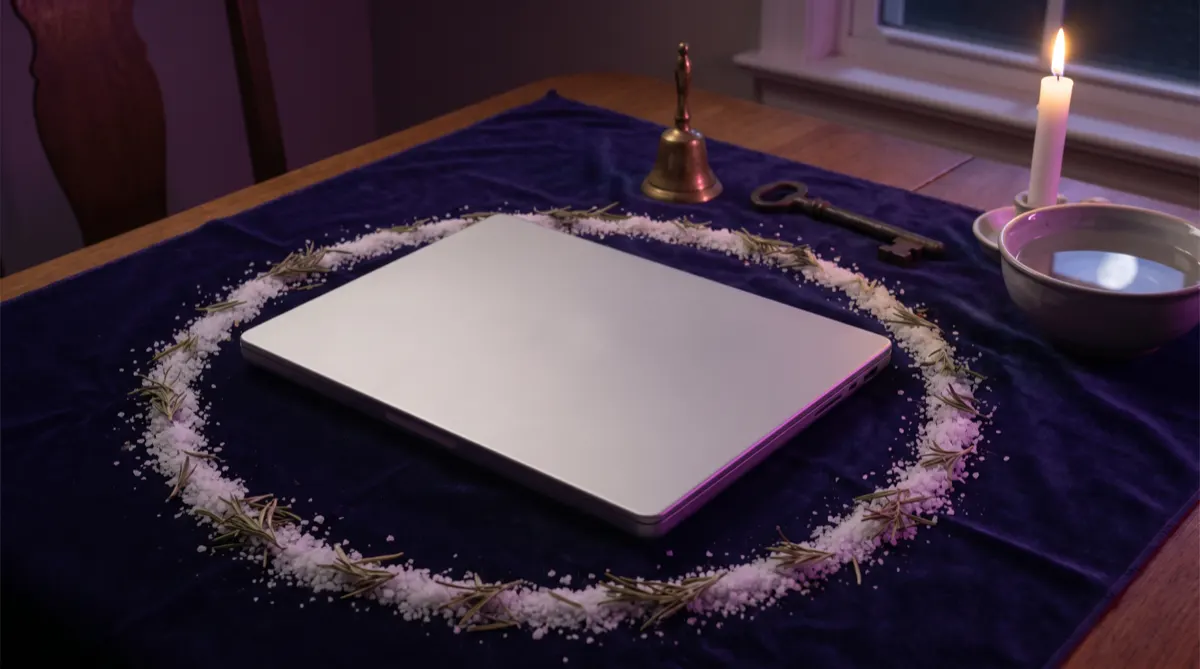
For hardware, write it on a small label for the inside of the case or the rack door.
As you finish, say what the mark is for, such as: protection for this service and the people who rely on it.
Note in your commit message or log that this is an inscription, as runes on objects were, and that it does nothing to the program.
Take care: Keep runes in comments only; non-ASCII characters in live code or filenames can break some tools. Some modern groups misuse runes for hate symbols; alu and laukaz are not among those signs, but it is worth knowing.
Versions across time and place
i
Alu on gold bracteates
Migration period Scandinavia · c. 400 to 650 CE
Thin gold pendants copied from Roman imperial medallions were stamped with heads, horses and birds and often the word alu. They were worn as amulets, and the word appears on them more than on any other object type.
Recorded in: Alu (runic), Wikipedia; Arild Hauge, Bracteates with Runes
ii
Laukaz, the leek word
Early runic · 4th to 6th century
Laukaz means leek or garlic and appears on bracteates and on the Fløksand knife. Scholars link it to growth, health and thriving. It is often read alongside alu as a formula of well-being.
Recorded in: Leeks in Germanic paganism, Wikipedia
iii
Lindholm amulet
Early runic · 2nd to 4th century
A bone piece from Skåne, Sweden, carries a runic name formula, a row of repeated runes and alu at the end, which many read as a closing charm word.
Recorded in: Alu (runic), Wikipedia
History
Alu appears in about two dozen runic inscriptions from roughly the third to the eighth century, on bracteates, a brooch from Værløse in Denmark, arrow shafts from the Nydam bog, the Elgesem and Eggja stones and cremation urns at Spong Hill in England. It literally resembles a word for ale, and other proposals link it to protection or to a ritual drink. Runologists agree it is a charm word but not on what exactly it meant.
Laukaz, leek, is the other well known formula word. These inscriptions put words of power on things people owned: pendants, weapons, combs and grave goods. No one carved runes on a computer before our time. Writing alu in a program or on a server is a modern adaptation built on that real habit of inscribing objects. The runes in a comment do nothing to the code, just as runes on a comb did nothing to the teeth.